
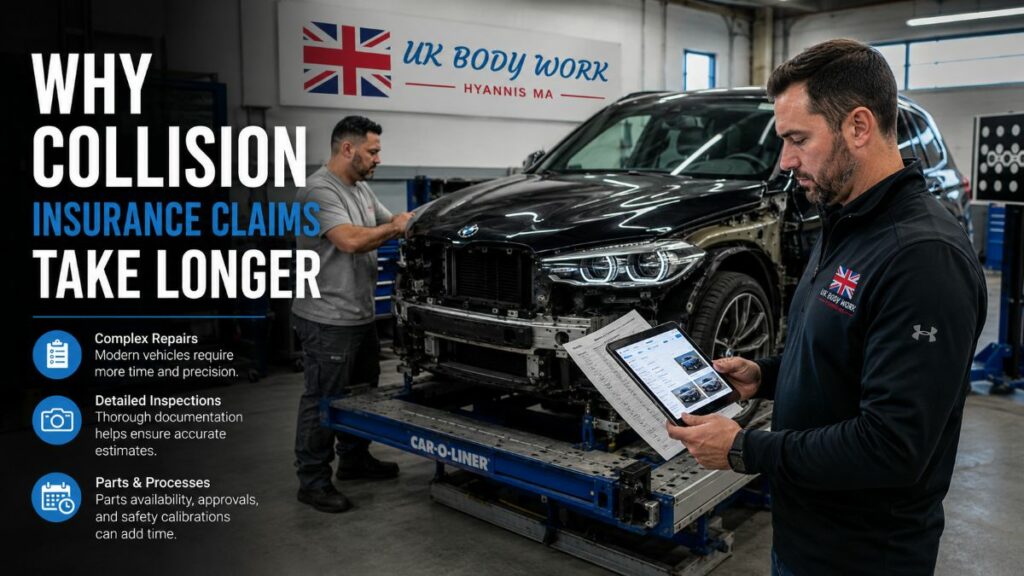
After a collision, one of the most frustrating parts of the process is waiting for the insurance claim and repairs to move forward. Many drivers assume the damage will be inspected, approved, and repaired within a few days — only to discover the process can sometimes take weeks longer than expected.
The truth is, modern collision repairs involve far more than replacing damaged parts and applying fresh paint. Today’s vehicles contain advanced safety systems, hidden structural components, sensors, cameras, and electronics that often require additional inspections, calibrations, and insurance approvals before repairs can be completed properly.
At UK Body Work, we work directly with insurance companies, parts suppliers, and repair technicians every day. In this article, we’ll explain some of the biggest reasons collision insurance claims take longer than most people expect — and what actually happens behind the scenes during the repair process.
If you’ve recently been involved in an accident, it’s also important to understand your rights during the repair process. We recommend reading our guide on insurance steering in Massachusetts so you know how insurance companies may try to influence where your vehicle is repaired.
And if you’re searching for a trusted repair facility, here’s why choosing a registered auto body shop in Massachusetts matters more than many drivers realize.
Many drivers also do not realize that Massachusetts law gives consumers the right to choose where their vehicle is repaired after an accident. Insurance companies may recommend certain repair facilities, but the final decision belongs to the vehicle owner. The Massachusetts Attorney General’s Office also provides consumer information about collision repairs and repair shop regulations here: Getting Your Car Repaired – Massachusetts.gov
The Damage You See Is Rarely the Full Damage
One of the biggest reasons collision insurance claims take longer is because the visible damage is often only a small part of the actual repair.
Modern vehicles are designed to absorb impact energy during a collision. While that improves safety for passengers, it also means damage is frequently hidden beneath bumper covers, fenders, lights, and other exterior panels. What may look like a minor accident on the outside can reveal structural damage, broken mounting points, damaged sensors, or bent reinforcement components once the vehicle is disassembled.
In many cases, the initial insurance estimate is written before the vehicle has been fully torn down. That estimate is considered a preliminary inspection — not a complete repair blueprint.
Once technicians begin disassembly, additional damage is often discovered, including:
- Broken brackets and supports
- Hidden frame or structural damage
- Damaged wiring or connectors
- Cooling system damage
- Suspension damage
- Cracked sensors or calibration issues
- Damage behind bumper reinforcement bars
When additional damage is found, the repair shop must document everything with photos, measurements, and updated estimates before submitting what’s called a supplement request to the insurance company for approval.
This process alone can add several days to a repair timeline, especially if the insurance company requires additional inspections or documentation before authorizing the next stage of repairs.
At UK Body Work, we always prefer to repair vehicles properly and safely rather than rushing through a repair and risking missed damage that could create problems later.
Insurance Companies Require Documentation for Everything
Another major reason collision insurance claims take longer is because nearly every step of the repair process requires documentation and approval.
Before repairs can move forward, insurance companies typically require detailed estimates, photos, labor calculations, part pricing, and repair procedures to justify the work being performed. Even after the initial estimate is approved, additional documentation is often needed once hidden damage is discovered during disassembly.
This creates a constant back-and-forth process between the repair facility and the insurance company.
In many cases, the repair shop must:
- Photograph hidden damage
- Submit supplement requests
- Provide OEM repair procedures
- Verify labor times
- Document structural measurements
- Explain why certain parts or repairs are necessary
Depending on the insurance company, approvals can sometimes happen quickly — or they may take several days if additional inspections are required.
Unfortunately, repair delays are not always caused by the body shop itself. In many situations, repairs are paused while waiting for insurance approvals, revised estimates, or authorization to continue the next stage of repairs.
This is one reason why working with an experienced collision repair facility matters. At UK Body Work, we help guide customers through the insurance process while making sure repairs are documented properly and completed safely.
Aftermarket Parts Can Create Major Repair Delays
Another issue many drivers never see behind the scenes is the growing use of aftermarket and LKQ (Like Kind and Quality) parts during the insurance repair process.
In Massachusetts, insurance companies are allowed to specify aftermarket or LKQ parts on vehicles with over 20,000 miles. While these parts may save the insurance company money, they can sometimes create major delays and repair complications for the collision repair facility — especially on today’s highly advanced vehicles.
Unlike OEM (Original Equipment Manufacturer) parts made by your vehicle’s manufacturer, aftermarket parts are produced by third-party companies. In some cases, these parts fit poorly, require modification, or fail to function properly with the vehicle’s safety and electronic systems.
This has become especially problematic with modern headlights, sensors, cameras, and ADAS safety systems.
Today’s headlights are far more advanced than they were 15 or 20 years ago. Many now contain:
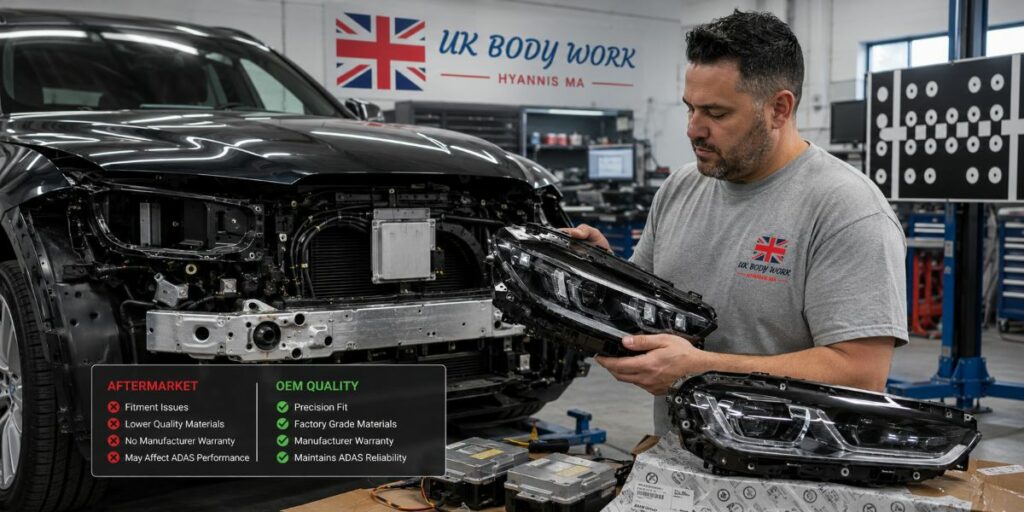
- Adaptive lighting systems
- Blind spot monitoring components
- LED control modules
- Radar and camera integrations
- Calibration-dependent electronics
Some aftermarket headlights are not CAPA certified and may not properly communicate or calibrate with the vehicle at all. When that happens, the repair facility is forced to stop repairs, disassemble components again, document the issue, and push the insurance company to approve the correct OEM part.
That entire process can add significant delays to the repair timeline.
In many cases, the insurance company ends up spending more money on additional labor, rental time, and rework than they would have by approving the correct part from the beginning. Unfortunately, customers are often left frustrated because they don’t see what’s happening behind the scenes.
At UK Body Work, we believe vehicle safety and proper repairs should always come before cutting corners to save a few dollars on parts.
This is also one reason many insurance companies try steering customers toward their “preferred” repair facilities. Shops participating in insurance referral programs often face pressure to minimize repair costs and limit pushback against questionable repair decisions.
As a consumer, it’s important to understand that you have the legal right to choose your own repair facility in Massachusetts. If you want to learn more, we recommend reading our guide on insurance steering in Massachusetts and why choosing the right shop can make a major difference in both repair quality and repair time.
Parts Delays Can Slow Down Collision Repairs
Even after repairs are approved, parts availability is another major reason collision insurance claims can take longer than most people expect.
Modern vehicles rely on thousands of specialized components, sensors, brackets, modules, and electronic systems. If even one critical part is unavailable, damaged during shipping, or does not fit correctly, the entire repair process can slow down significantly.
In recent years, supply chain issues and manufacturer backorders have made this even more common throughout the collision repair industry.
Some of the most common delays include:
- OEM parts on backorder
- Incorrect aftermarket parts arriving
- Poor-fitting aftermarket components
- Shipping damage
- Calibration-related part issues
- Limited availability on newer vehicle technology
Today’s vehicles are far more advanced than they were a decade ago. Many repairs now involve radar systems, blind spot monitors, parking sensors, cameras, adaptive headlights, and other ADAS safety technology that must function properly before the vehicle can safely return to the road.
Unfortunately, some aftermarket parts simply do not fit or operate correctly with these systems.
A headlight today is no longer just a bulb and housing. Some contain expensive electronic modules, steering-responsive lighting systems, sensors, and calibration-dependent components. If an aftermarket light fails calibration or does not communicate properly with the vehicle, the repair facility may have to stop the repair, remove the component, document the issue, and push the insurance company to approve the correct OEM replacement.
That process can add days, weeks, and in rare cases over a month to a repair timeline very quickly. As I write this article. I have a 2024 Jeep Grand Cherokee that has been waiting for a front distance sensor for about 45 days now and the manufacturer still has no release date. I am constantly told another 45 days and then after the 45 days they say another 45 days.
In many situations, the repair facility is just as frustrated as the customer because repairs are being delayed by part quality issues, approval delays, or unavailable components that are outside of the shop’s control.
At UK Body Work, we believe proper repairs and vehicle safety should always come before rushing a vehicle through the repair process with questionable parts or shortcuts.
Modern Vehicles Are Far More Complicated To Repair
One of the biggest reasons collision claims and repairs take longer today is because modern vehicles have become incredibly complex.
Years ago, many collision repairs involved replacing damaged panels, repairing metal, and refinishing paint. While those repairs still exist, today’s vehicles are now filled with advanced electronics, sensors, cameras, computers, and safety systems that all have to function correctly after the repair is completed.
Many newer vehicles now include:
- Blind spot monitoring
- Lane departure warning systems
- Adaptive cruise control
- Collision avoidance systems
- Parking sensors
- Front radar systems
- 360-degree cameras
- Adaptive LED headlights
Even a relatively minor accident can affect these systems.
For example, something as small as a damaged bumper bracket or slightly misaligned sensor mount can prevent an ADAS calibration from completing properly. In some cases, the vehicle may display warning lights, disable safety features, or require dealership programming before repairs can be finalized.
What customers often do not see is that many repairs now involve:
- Pre-repair scans
- Post-repair scans
- Electronic diagnostics
- Calibration procedures
- Test fitting components
- Structural measurements
- Software updates
These procedures are critical for vehicle safety, but they also add time to the repair process.
In many situations, collision repair facilities must coordinate with dealerships, calibration vendors, parts suppliers, and insurance companies all at the same time to ensure repairs are completed correctly.
While customers understandably want their vehicles back as quickly as possible, modern collision repair is no longer just about making a vehicle “look good” again. The vehicle’s safety systems must also function properly before it can safely return to the road.
Why Choosing The Right Repair Shop Matters
When most people think about a collision claim, they assume the delay is simply caused by the repair shop. In reality, the process often involves multiple inspections, insurance approvals, parts delays, hidden damage discoveries, calibrations, and communication between several different companies before repairs can be completed properly.
Modern vehicles are far more complicated than they were even 10 years ago, and repairing them correctly takes time, experience, and proper documentation.
Unfortunately, many customers only see the final repair timeline — not the behind-the-scenes challenges happening throughout the process.
That’s why choosing the right collision repair facility matters.
A quality repair shop should advocate for proper repairs, communicate clearly throughout the process, and prioritize vehicle safety over rushing repairs simply to move cars through the shop faster.
At UK Body Work, we understand how stressful the collision repair process can be. Our goal is to help customers navigate insurance claims honestly while making sure repairs are completed safely and correctly the first time.
If you have questions about a collision repair or insurance claim, feel free to Contact UK Body Work and our team will be happy to help.